HENRI (Human Eye Notification Rapid Interface) System
HENRI (Human Eye Notification Rapid Interface) System
Prototyping
Professor Name:Chun-Ching Chen
Cooperation Partner: Taiwan Motor Neuron Disease Association
Patent:106124886(TW)
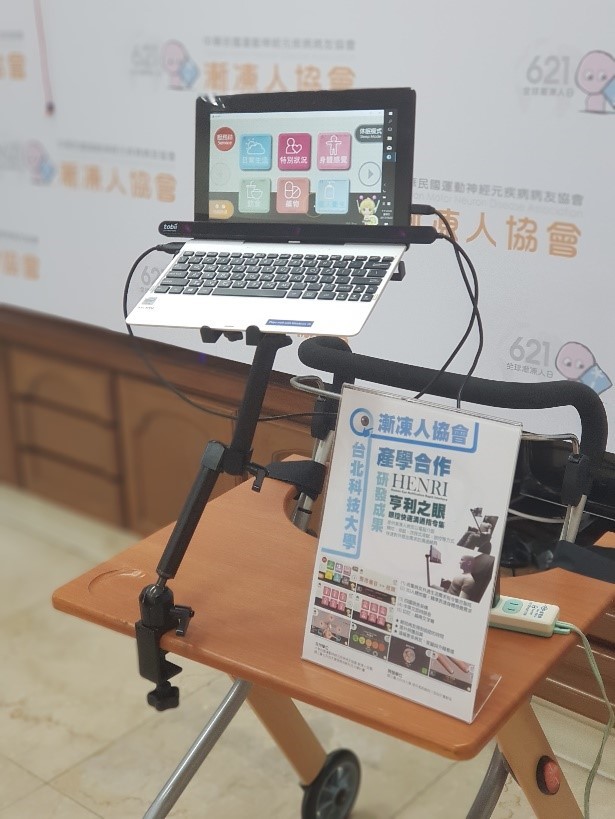
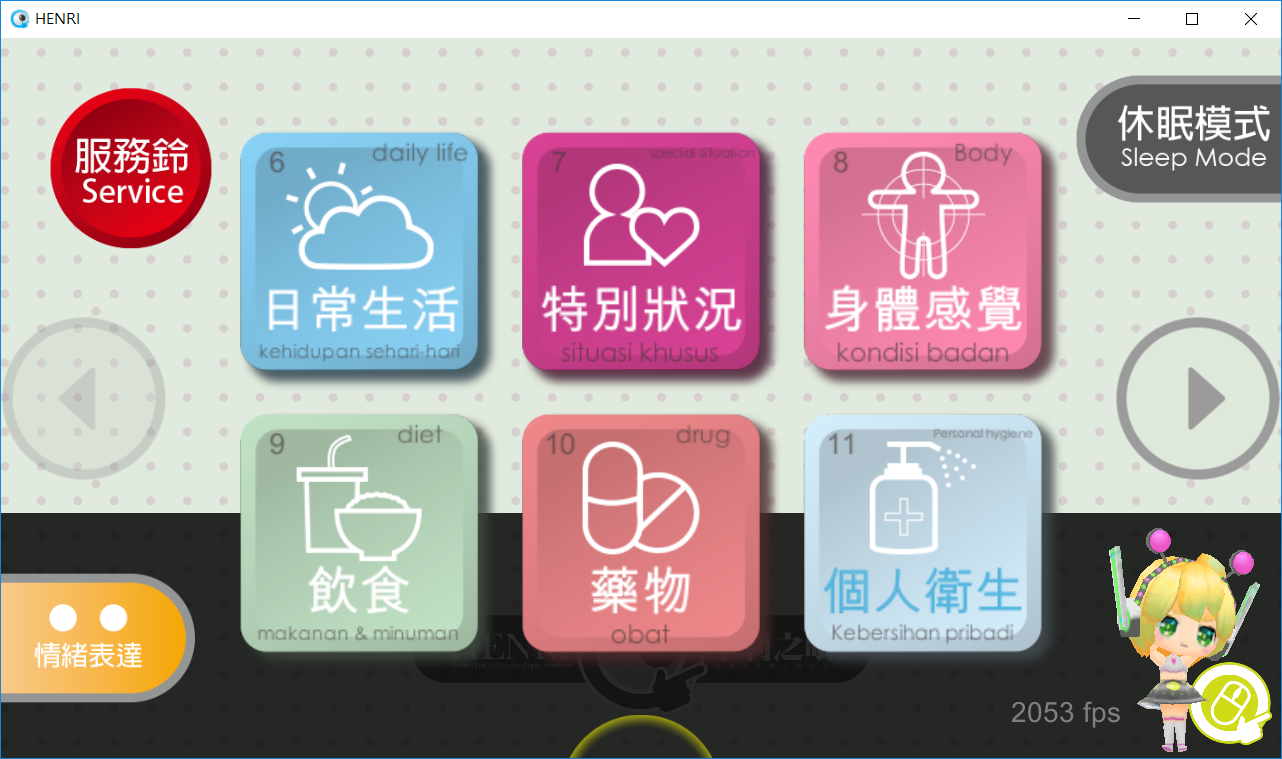
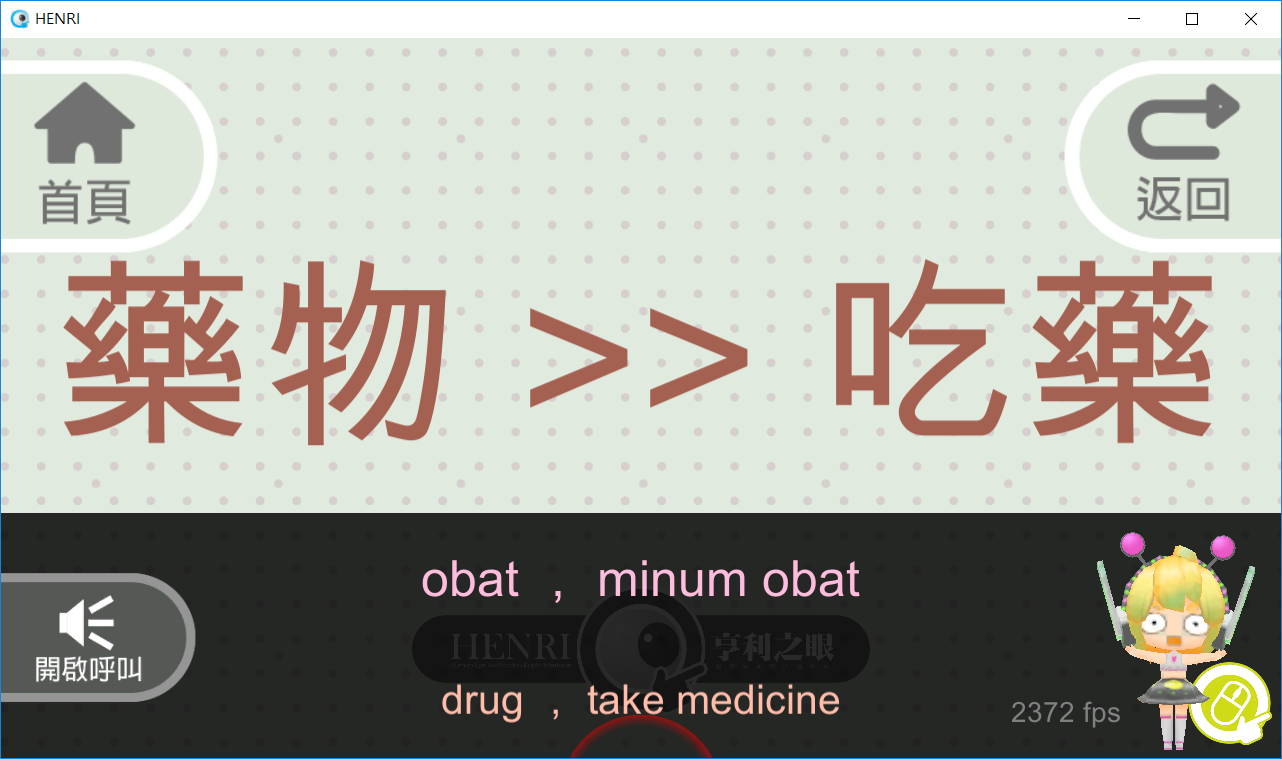
Dysarthria (a speech disorder) and tetraplegia (poor limb control) are the primary factors affecting the quality of life of amyotrophic lateral sclerosis (ALS) patients. In Taiwan, assistive communication devices are used to enhance the lives of many ALS patients. However, Taiwan has numerous foreign caregivers who cannot read the Chinese text on such devices. To address this language gap problem, we developed an eye-controlled augmentative and alternative communication system, called human eye notification rapid interface (HENRI), with a user-friendly graphical user interface and multilingual pretranslated commands. To identify its usefulness, we conducted experiments by recruiting ALS patients with dysarthria who used or planned to use eye-controlled devices. In the experiments, the patients were instructed to execute communication tasks by using their typical communication methods or equipment and by using the HENRI system; subsequently, their performance levels under the two systems were compared. The results showed that the HENRI system improved the communication efficiency of patients. Therefore, the HENRI system is suitable as a communication medium between ALS patients and foreign caregivers, and it can prevent patients’ overreliance on caregivers, thus enabling caregivers to take breaks and maintain their care quality. The effectiveness of the proposed system validates the need for adaptive and assistive communication software to address language-based communication barriers between patients and caregivers. HENRI is now available in the Taiwan Motor Neuron Disease Association to serve patients who have the requirements. Future work will focus on the application of other medical cases and situation.